Tuesday, January 31, 2012

Chain Reactions

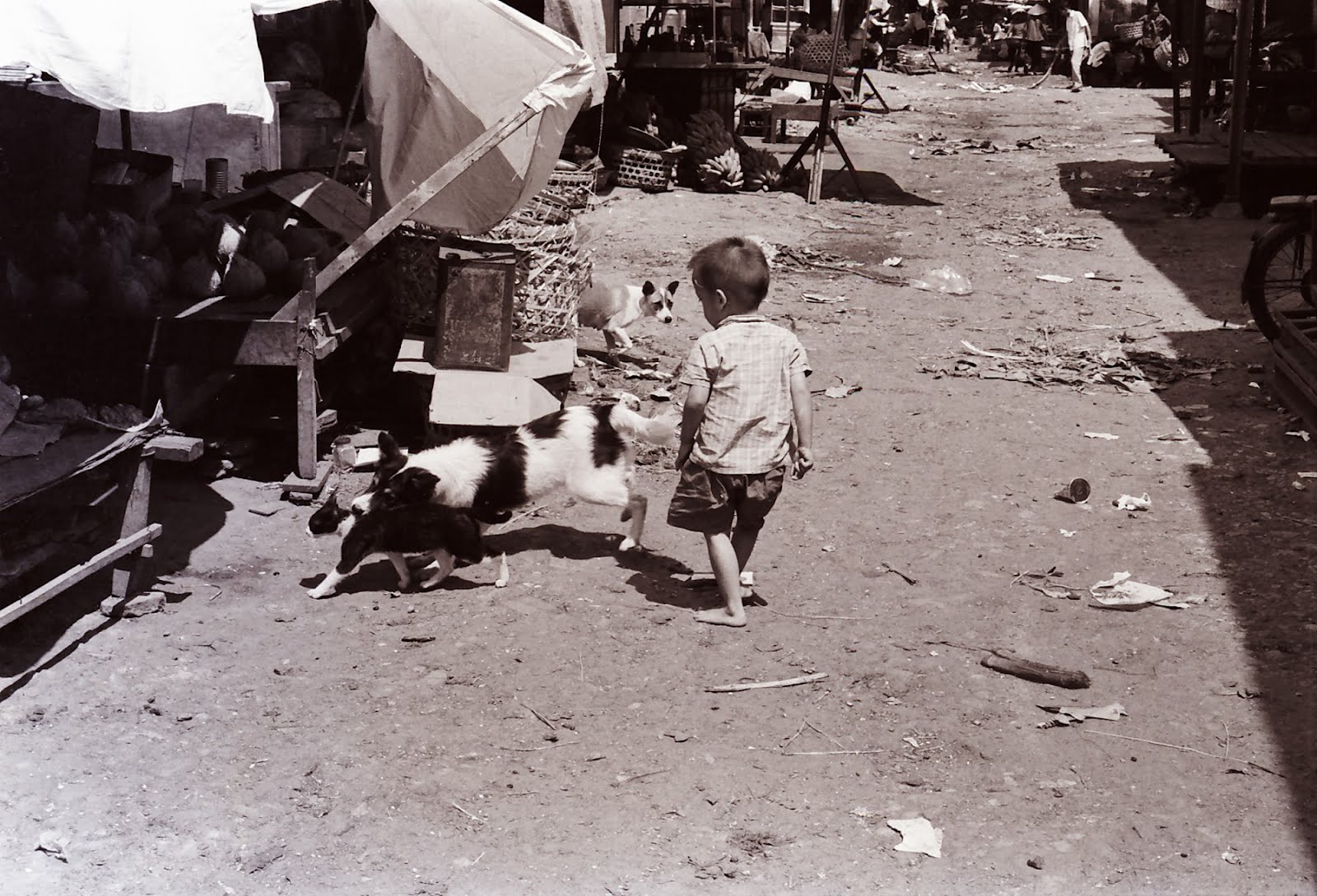
There are two things that I like about this picture. The most obvious is the reason for taking the picture in the first place. What’s not to like about a picture of a dog biting a cat?


But there is more to the picture than meets the eye. For instance, why is the dog biting the cat?


To know the answer to that question, you would have had to be walking the streets of Saigon’s Cong Ly slums on a muggy afternoon in 1971, and see what I saw a split second before this picture was taken.<

Friday, January 27, 2012

Founding Fathers vs Funding Fathers

The one thing that the founding fathers and funding fathers have in common is that we owe them a lot.

We know most but not all of the founding fathers by name—Washington, Jefferson, Franklin, and Hamilton—a veritable who’s who of who’s in our pockets.


We know some but certainly not all of the funding fathers but we do know the names of our political leaders—everyone of them most certainly with their hands in the funding father’s pockets.

The founding fathers are remembered both for what they did and for what they said because back then what you said and what you did was mostly the same thing.

Monday, January 2, 2012

Waiting For the Lima Bean

Waiting for something to happen is the running theme in Hell on Earth, a love story. Hank was sent down to become a newspaper writer and in the end no amount of waiting was going to see that goal reached. On the subject of waiting, this story was written a quarter of a century ago and has also been waiting to see the light of day.

This story could easily be called, “The lima bean that never came” but that title hints at a rather sad ending and besides we don’t know that it never came. No this is simply a story about waiting and although waiting never comes easily “Waiting for the Lima Bean” is a much better title and a much nicer thought.

People wait for all kind of things to happen. They wait impatiently everyday for their mail to arrive—anticipating that special letter that will somehow make that day special. Of course, that letter rarely shows up. That is the definition of ordinary. Ordinary is what happens while we are waiting for the extraordinary. It can’t be any other way but that doesn’t make it any easier to swallow. The hardest thing to wait for is results.

Saturday, December 31, 2011

Tijuana Bull Fights/Republican Presidential Debates

I’ve spent the last three or four months totally engrossed by the continuing Republican Presidential Debates. Now that they seem to be over, at least for the time being, I find myself reminiscing for some unexplained reason about the Tijuana Bull Fight I attended over 40 years ago.

The debates have gotten pretty mundane of late. Each candidate has staked out his own territory and is now dancing with the girl he brought to the dance.

I don’t know why I keep watching them except to say it’s just so much fun. Bless their hearts the candidates are doing everything in their power to put on a good show, which is why, I think, they remind me so much of the trip I took to Tijuana to watch the bullfights back when I was stationed in San Pedro.

Tuesday, December 13, 2011

Boy Scout Camps, Mail Chutes, The Emily Morgan Hotel Across from the Alamo, and the Brother of the Mayor of Rochester, New York

Hell on Earth, a love story made good use out of a lot of unrelated events by giving the task of relating them to a caseworker. I reason I gave him this power is because I believe that even seemingly unrelated events often have something to do with each other—if you look hard enough. Not always, but sometimes.

This line of thinking, if it does nothing else, does give coincidences new meanings and increased importance because, now, you never know.

I was a boy scout in the late 1950’s in Rochester, New York. In spite of the brutal winters and rainy springs our troop managed at least one campout every quarter. We camped at the J Warren Cutler Scout Reservation but simply referred to it as Camp Cutler. We had great times but I can honestly say that after I doused the flames of my last campfire and rolled up my sleeping bag for the last time, I never gave Camp Cutler another thought. There were just too many other things going on.

Saturday, December 10, 2011

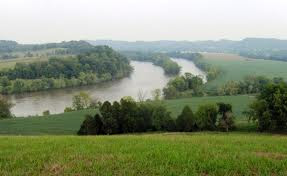
The French Broad River

I live in the vicinity of many rivers that are named after prominent people. There’s the Elizabeth River named after the good Queen Elizabeth and the James River named after the equally good King James. I went to school a few miles north of the Charles River, originally named the Massachusetts River by Captain John Smith, but later renamed the Charles River by the good King Charles himself.

What better way to honor someone than to name a river after him or her—at least that was the case before so many rivers started turning up polluted, making the honor a dubious one. Nevertheless it is the thought that counts.

It is very important that when one comes upon a river in need of a name that an appropriate name be chosen. It is a responsibility that should not be taken lightly. That is why I am a little disappointed by a river I recently came across in Tennessee that ran through and around the city of Pigeon Forge—and yes, I do think naming a city is just as important as naming a river and will soon address the issue of Pigeon Forge—but for this blog, we are talking about the naming of rivers—specifically the naming of rivers after people.

I was traveling the interstate when I suddenly found myself on the French Broad River Bridge going over the French Broad River, when it occurred to me that some people could be very cynical and equally hypocritical. "Who," I wondered, was this famous and at the same time infamous French broad?"

And what, I would like to know, did this French broad do that made everyone like her and at the same time, not like her that much. Sure they named the river after her but no way were they going to use her real name.

“We’ll just call it the French Broad River,” declared the townsfolk. “Everyone will know who we’re talking about.” What did this French broad do to make the people love her so and at the same time hold her in such little regard?

A google search for “famous French women in the Pigeon Forge area that may or may not have had a bridge named after them” turned up no French broads whatsoever but did note that a fire in 1856 destroyed the county courthouse and all the records of the early settlers. So maybe her name went up in smoke.

I guess we will never know the name of the old French broad.
But we can still honor her every time we cross her.
Here’s to you, French broad, gone but not forgotten, recognized but not really.
Saturday, November 26, 2011

Abraham Lincoln Playground - Part One

Abraham Lincoln School metamorphosed into Abraham Lincoln Apartments


Sports

Most school playgrounds today are ghost towns if there is not an official community sponsored event going on. If they had their way most kids today wouldn’t be caught dead hanging around a school playground—even though they are designated safe zones or maybe this is because they are designated safe zones.

It was just the opposite when I was a kid because we didn’t know where else to go. As we grew older we would find our way to other places but in those early days everything seemed to start and end at the playground. My world through about the sixth grade ranged no further than about four or five blocks in every direction from my house. That put Abraham Lincoln School and its playground on the western-most border of my very small world. There was rarely a need to venture into the frontier that lay beyond it.